Peace and Love
and Plantar Fasciitis

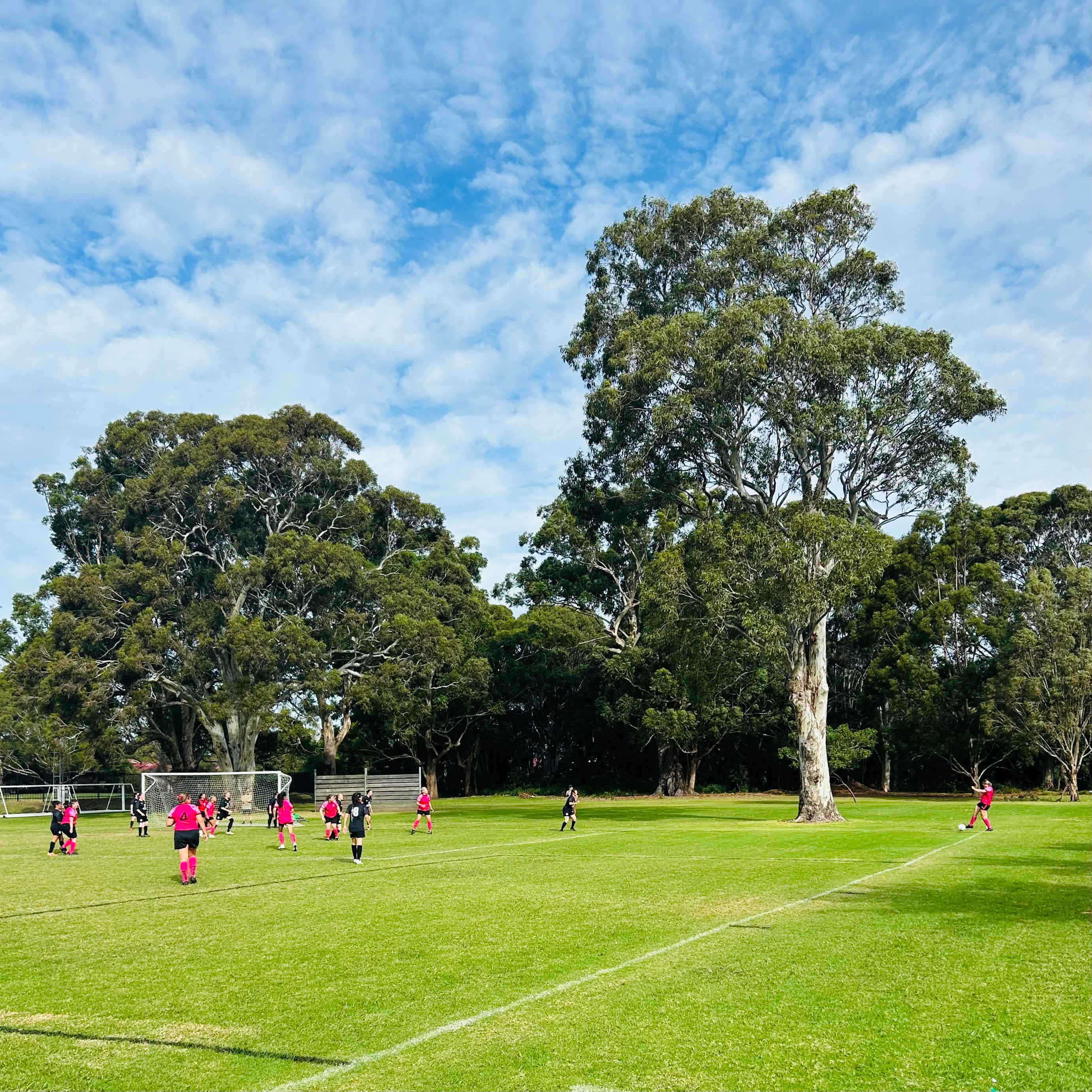
I returned to the Couch to 5km program after fully recovering from COVID at the beginning of this year. God, I loved it. I could feel myself making progress every time I went out! I discovered my new favourite thing in the whole world, which is jogging to the beat of basically any Bleachers song and speeding up to a sprint during the chorus and/or bridge!
Along with my runs, I was playing mixed futsal on Monday nights, women’s futsal on Wednesdays, and then soccer training started on Tuesdays. I was also taking the dogs for a 45-minute walk along the beach most days. I felt strong, fitter than ever, completely ready for the winter soccer season to begin! I was having smug thoughts along the lines of Ageing shmageing! I was on fire!
It was at exactly this point that the niggly heel and Achilles tendon pain I’d been noticing first thing in the morning and then also after games shifted from ‘Oof, this is a tad uncomfortable!’ to ‘I am actually unable to bear weight on my left foot without a significant amount of stabbing, burning pain,’ and suddenly my schedule of all optional activities that involved me being vertical ground to a sad and sudden halt*.
One lunchtime during the time the pain was morphing from a morning niggle to an all-day impediment, the exercise physio at work, Tristan, asked about my hobbling, then told me that what I was describing sounded like plantar fasciitis. I lifted my foot above the top of the table so he could inspect my shoes, which he quickly deemed to have too little heel support. He then prescribed a lot of rest and heat and stretches.
I explained to him that I had learned over years of perpetual muscle tightness and an Achilles tendon rupture that my calf muscles had been designed for legs much shorter than my actual legs, so trying to keep the whole area below my knees happy and whole would therefore require, like, daily maintenance probably for the rest of my life.
‘Yes,’ he said.
‘But, like, isn’t there an easier way to fix the problem?’ I asked. ‘Like a surgery or something to make my calf muscles longer? It just seems like so much work.’
He smiled. ‘What do you say to your clients who want a magical fix rather than doing the work?’
TOUCHÉ.
When I first started playing soccer again in 2021, I became intimately acquainted with the PRICE (pain relief, rest, ice, compression, elevation) approach to managing injuries. The acronym later changed to POLICE (protection, optimal loading, ice, compression, elevation) after it was found that ongoing, modified movement was better for recovery than complete rest.
During our lunch chat at work that day, Tristan told me the acronym’s been updated once again; the best approach is no longer POLICE but PEACE and LOVE, which almost made me cry. How lovely is that evolution? It made me think of Martin Luther King Jr’s quote about the arc of the moral universe, and how beautiful humans and science and bodies are.
But then Tristan told me I’d need to take a long break from walking or running to allow my foot to heal, and I forgot about all the warm feelings I’d been having about humanity generally and physiotherapy very specifically, and instead started feeling grumpy that my body had let me down in such a spectacularly cruel way when I’d been on such a high, and that now I couldn’t do anything I actually wanted to do because of my stupid stumpy calf muscles.
The physio I saw to confirm Tristan’s diagnosis did in fact confirm Tristan’s diagnosis, then recommended shock wave therapy, which we started the same day. After bringing the machine into the room, he told me that I should let him know if at any point during the treatment the pain reached a 5 or 6 out of 10.
After (what felt like) jackhammering my Achilles tendon and the bottom of my poor, throbbing foot for (what felt like) several hours, he packed away the machine and asked how painful I’d say the procedure had been.
‘Probably the worst was 7 or 8 out of 10?’ I told him.
When he again explained that I was supposed to tell him if the pain went over a 5 or 6, I explained that I hadn’t known it was a 7 or 8 until after he’d finished, because maybe what I was experiencing was actually quite mild compared to what a 10 could be?
Then I looked at him like 😬 and he looked at me like 😐 and I said, ‘I bet you’re looking forward to seeing me in here every week for the next forever!’ and he said, ‘It won’t be forever,’ and he sounded very relieved about that.
I realise it may be becoming boring to hear me say this in various ways in every single post on this site, but I’m very slowly learning to approach my uncomfortable emotions with curiosity and compassion, and to say validating things to myself like, ‘That makes sense!’ and ‘Of course you feel that way!’
It’s become clear over this year, with COVID and now plantar fasciitis, that I have even less patience for uncomfortable physical sensations than I do for uncomfortable emotions. My typical reaction is less ‘Tell me everything, I want to support you!’ and more ‘SHUT UP AND STOP NEEDING ANYTHING FROM ME,’ which, now that I type this out loud, obviously sounds very mean and unhelpful, especially when I’m already sick or injured.
I need to evolve from policing any feelings – either physical or emotional – that threaten to slow me down, and instead respond to these signals of distress with a little peace and love.
I should have listened to my body when it told me it was in too much pain at the physio, even if I wasn’t sure how my feelings mapped onto the physio’s scale and whether I was getting the measuring right. I should have asked him to dial the machine’s intensity down rather than clenching every muscle from my forehead to my toe-tips and suffering through.
I should have listened to my tendon back when it first let me know it wasn’t okay, or when I felt the twinge in my calf muscle on a run one day, or when my heel started signalling its discontent each morning. My body tried to warn me, multiple times, and I ignored it.
Had I been open to these bids for attention and rest, maybe I’d have avoided an overuse injury which has now sidelined me for four weeks (and counting) of the soccer season I’d been so pumped for.
(I’m sorry, body.)
I keep telling my soccer team I’ll be able to play the following Sunday, and then talking to my physio who bursts my optimistic bubble by reminding me of all the steps I still have to master without increasing pain before I return to game mode: jogging, then jumping, then hopping, then – finally – sprinting. Then doing all of this while wearing my soccer boots instead of my cushioned new runners.
I feel agitated and impatient, but I’ve learned my lesson; I won’t be pushing through pain or risking injuring myself further. Instead, I’ve been sweating my way through pilates classes, swallowing large amounts of chlorinated (heated!) water while swimming laps at the local pool, ticking off my eccentric heel raise exercises while washing my hair in the shower, and massaging my calf muscles and feet over and over and over; doing the work, every day, PEACE-and-LOVE-ing my way back to healing not only the wounded tissue in and around my foot, but also my relationship with my body and with rest.
* My schedule of activities that involve being horizontal have also ground to a screaming halt, but that’s a topic for a different day, ha ha ha haaa haaaaaaahhh aaaarghrghghh ugh *cries*
Hate rating pain out of 10! Need hours of prep to define the scale!